
If you own a home in Brooklyn and plan to move, one of the first questions is timing: should you sell first and then buy, or buy your next home first and then sell? There is no single right answer. The best choice depends on your finances, your next home, and how much uncertainty you are comfortable with.
Option 1: Sell First, Then Buy
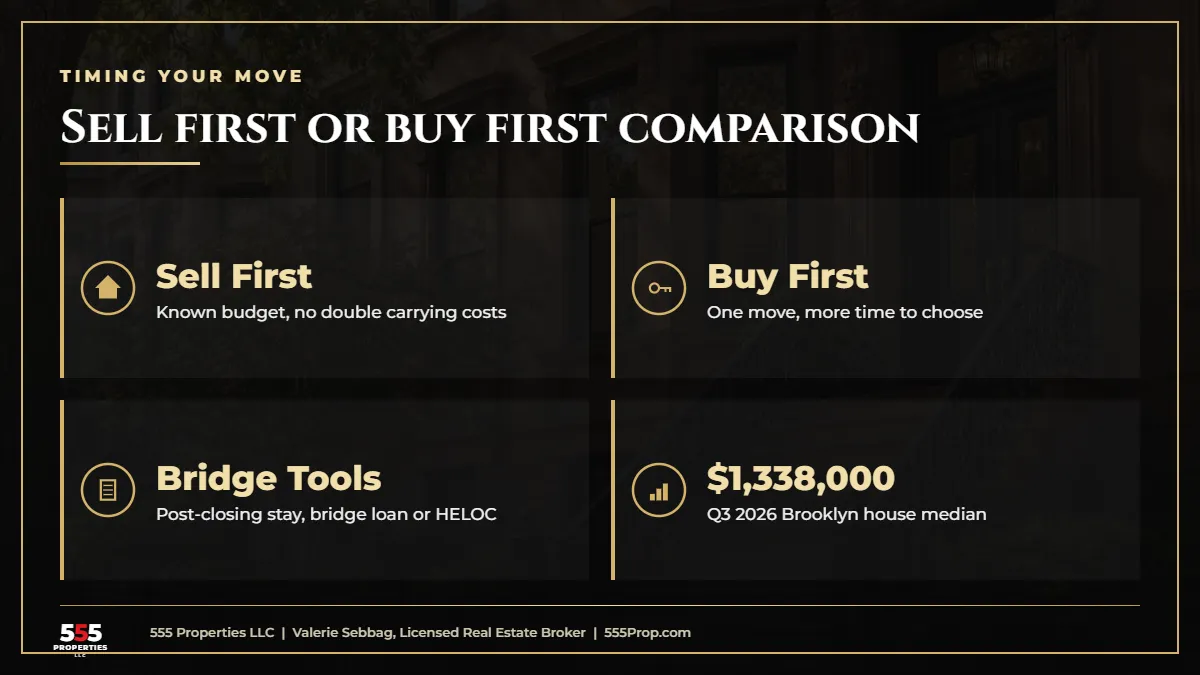
Selling first means you know exactly how much money you have before you shop. In New York City, where contingent offers are often weak, a buyer with sale proceeds in hand can compete like a cash buyer.
- Pros. Known budget, no double mortgage, and a stronger position when you make an offer.
- Cons. You may need temporary housing or a move-out date that does not match your next purchase.
- Tools. Negotiate a longer closing, or a post-closing possession agreement that lets you stay for a set period after closing, usually with money held in escrow. Your attorney drafts these terms.
Option 2: Buy First, Then Sell
Buying first lets you move once and choose your next home without a deadline. It also means carrying two homes for a while.
- Pros. One move, more time to find the right home, and your current home can be shown empty and staged.
- Cons. Two sets of carrying costs, and lenders and co-op boards will look closely at your debt.
- Tools. A bridge loan, a home equity line of credit opened before you list, or cash reserves. Many co-op boards require strong financials and may not accept a purchase that depends on another sale.
What the Brooklyn Market Says Right Now
Public records show Brooklyn 1 to 3 family homes reached a median sale price of $1,338,000 in the third quarter of 2026, while recorded house sales over the past year fell to 5,261 from 5,548. When good homes are scarce, well-prepared sellers can often sell on their own timeline, which can make selling first more comfortable. Buyers, however, may face competition for the homes they want. Read Brooklyn Home Prices Hit a Two-Year High for the full data.
Timeline and Costs to Plan For
- Timing. House and condo sales in New York City often take two to three months from signed contract to closing. Co-op sales usually take longer because of board review.
- Seller costs. Sellers usually pay the NYC Real Property Transfer Tax, the New York State transfer tax, broker commission and attorney fees.
- Buyer costs. Buyers of residential property at $1 million or more in New York City pay the mansion tax, which starts at 1 percent and rises at higher prices.
- Taxes on your gain. If the home was your primary residence for at least two of the last five years, federal law lets you exclude up to $250,000 of gain, or $500,000 for married couples filing jointly. Ask your accountant how this applies to you.


Which Path Fits You?
| Your situation | Usually points to |
|---|---|
| You need the sale proceeds to buy | Sell first |
| You cannot carry two homes at once | Sell first |
| You have savings or home equity to bridge the gap | Buy first can work |
| Your next home is a co-op | Sell first, or have strong financials ready |
| You want to move only once | Buy first, or sell with a post-closing stay |
We help owners plan both sides: pricing and preparing the sale, and coordinating timing with your attorney, lender and next purchase. Start with a private valuation, or read selling your home with confidence and selling a brownstone in Brooklyn.
Frequently Asked Questions
Can I make an offer that depends on selling my home?
You can, but in New York City many sellers prefer offers without a sale contingency, so these offers are often less competitive.
Can I stay in my home after I sell it?
Sometimes. A buyer may agree to a post-closing possession period, usually short and with funds held in escrow. Your attorney negotiates the terms.
Is a bridge loan a good idea?
It can help some owners, but it adds cost and risk if your home takes longer to sell. Compare options with a lender and your financial advisor.