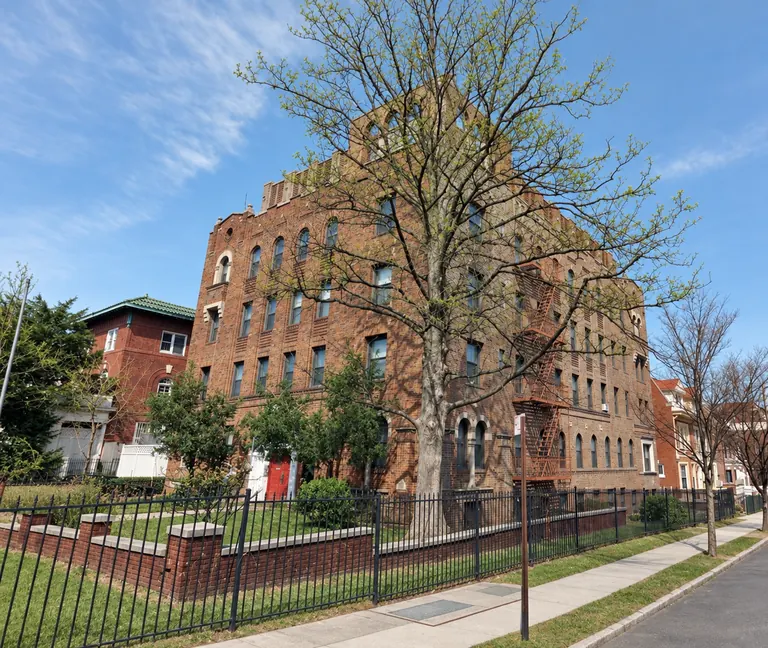
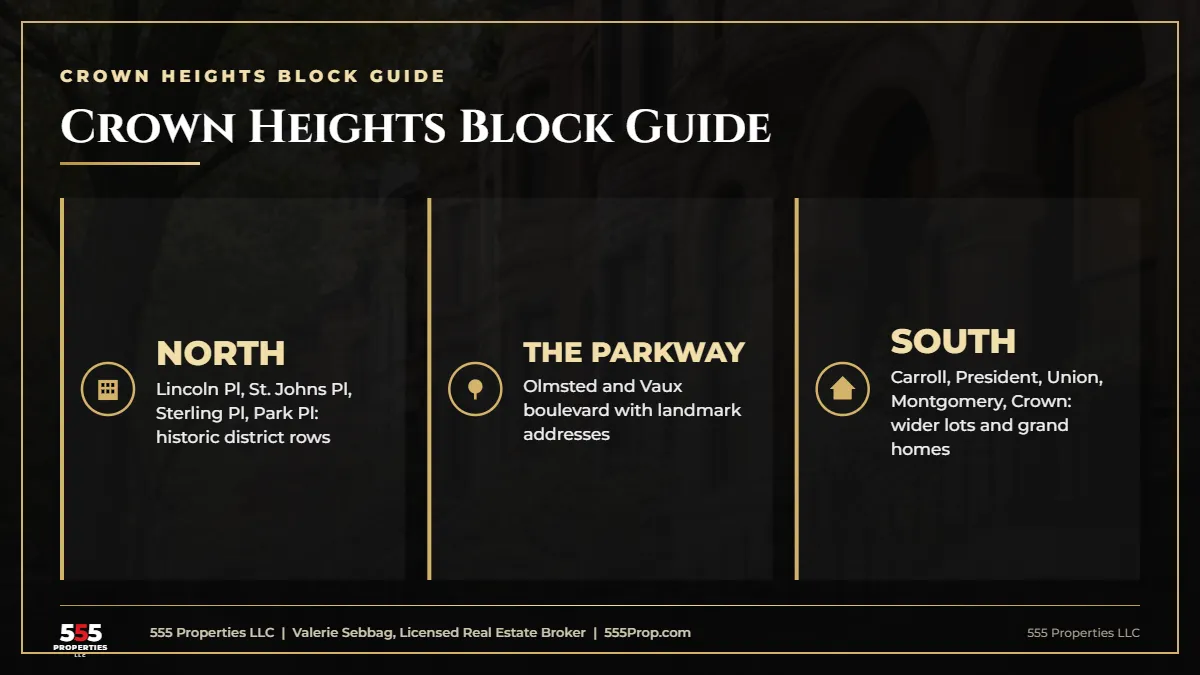
Walk south from Atlantic Avenue toward Empire Boulevard and you pass through more than a century of Brooklyn building history. North of Eastern Parkway, rows of brownstones and limestones line streets like Lincoln Place, St. Johns Place, Sterling Place and Park Place. South of the parkway, Carroll Street, President Street, Union Street and Montgomery Street open into wider lots and some of the borough’s most impressive early twentieth century homes.
North of the Parkway: A Protected Streetscape
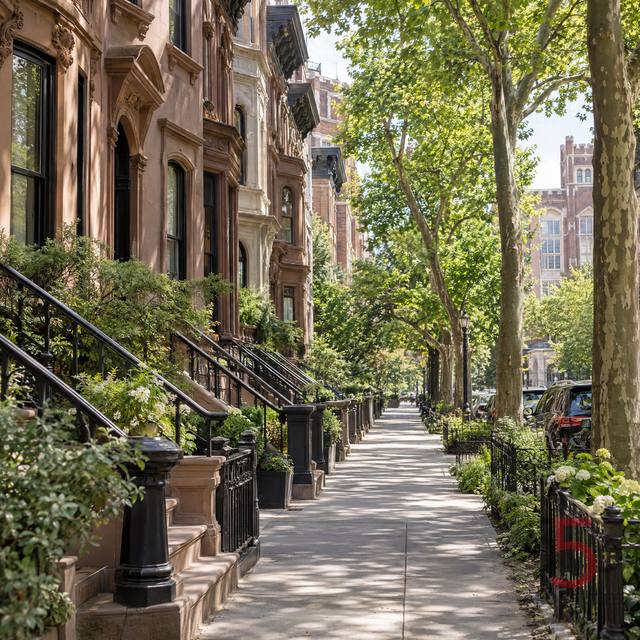
Much of the area north of Eastern Parkway sits within the Crown Heights North Historic District, designated by the Landmarks Preservation Commission in three phases in 2007, 2011 and 2015. The third phase alone added roughly 640 buildings, mostly between Brooklyn and Albany Avenues from Pacific Street to Lincoln Place. The district holds a remarkable range of nineteenth and early twentieth century architecture, including Romanesque Revival, Renaissance Revival and Queen Anne rowhouses, freestanding mansions and early apartment houses.
Eastern Parkway: The Spine of the Neighborhood
Designed by Frederick Law Olmsted and Calvert Vaux in the 1870s, Eastern Parkway was conceived as a grand boulevard leading from Prospect Park. Today its tree-lined malls connect landmark institutions near Grand Army Plaza with residential blocks across Crown Heights. Its best-known address is 770 Eastern Parkway, the world headquarters of the Chabad-Lubavitch movement and an important center of community life.
South of the Parkway: Wider Lots, Grander Homes
Below the parkway, many blocks of Carroll Street, President Street and Crown Street were built up later, in the early decades of the twentieth century, with large single-family homes, semi-detached limestones and generous setbacks. Montgomery Street and Union Street add their own mix of rowhouses and apartment buildings. These blocks feel different from the historic district to the north, and buyers often seek them for space, light and gardens.
Selling a Home in a Historic District
Landmark designation is often an asset when selling, because it protects the character of the block. It also comes with rules that buyers will ask about. Being ready with clear answers helps keep a sale on track.
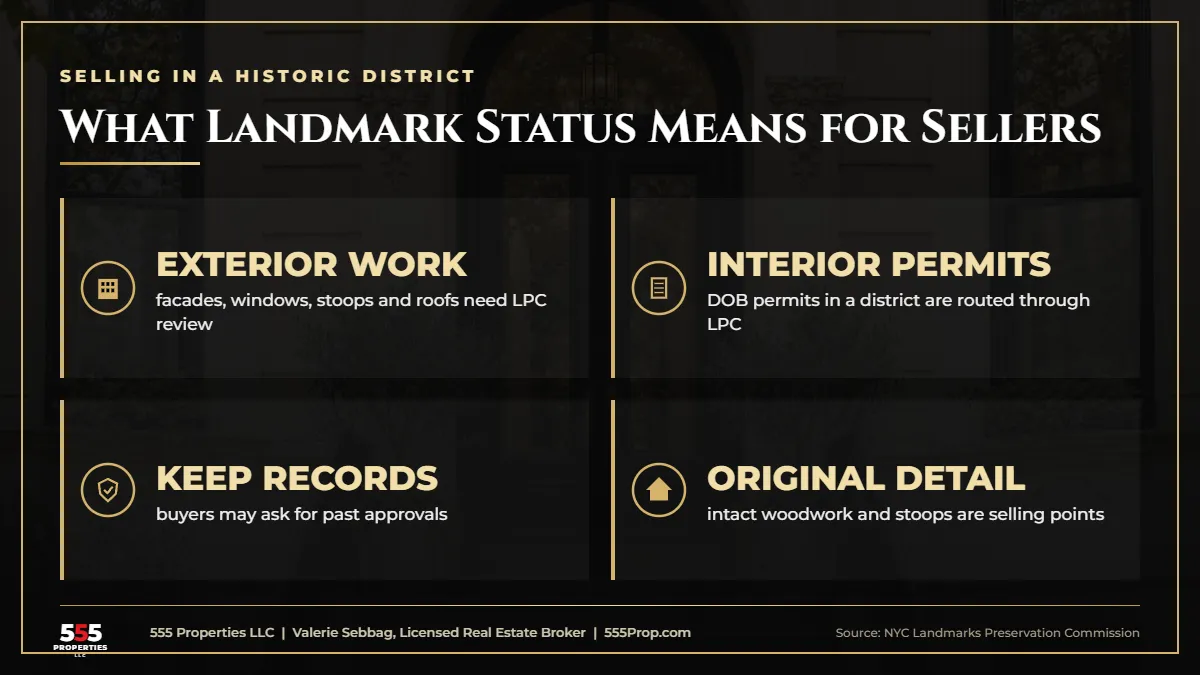
- Exterior work needs review. Changes to facades, windows, stoops, railings, roofs and rear additions generally need a Landmarks Preservation Commission permit.
- Interior projects still touch the process. When interior work needs a Department of Buildings permit, the application is typically routed through the commission for a sign-off.
- Records matter. Keep copies of any commission permits for past work. Buyers and their attorneys may ask for them.
- Unpermitted work can slow a deal. If past changes were made without approval, discuss options with an attorney or expediter before listing.
Know Your Block Before You List
Two homes a few streets apart can appeal to very different buyers. A narrow brownstone in the historic district, a wide limestone south of the parkway and a two-family on a mixed block each need their own pricing and presentation. Our Crown Heights street-level guide and brownstone selling guide go deeper, and Modern Brownstones in Brooklyn covers updating a historic home without losing its character.
If you own on one of these blocks and are thinking about a sale, request a private valuation from Valerie, or learn more about brownstone and townhouse sales with 555 Properties LLC.