
Commercial and investment property in Brooklyn covers a wide range: corner stores with apartments above, retail strips, walk-ups, small office buildings, garages and development sites. Selling any of them is a different process from selling a home, and for many owners the sale is only half of the plan. The other half is what happens to the proceeds, which is where the Section 1031 exchange comes in. This guide brings both together.
What Kind of Property Are You Selling?
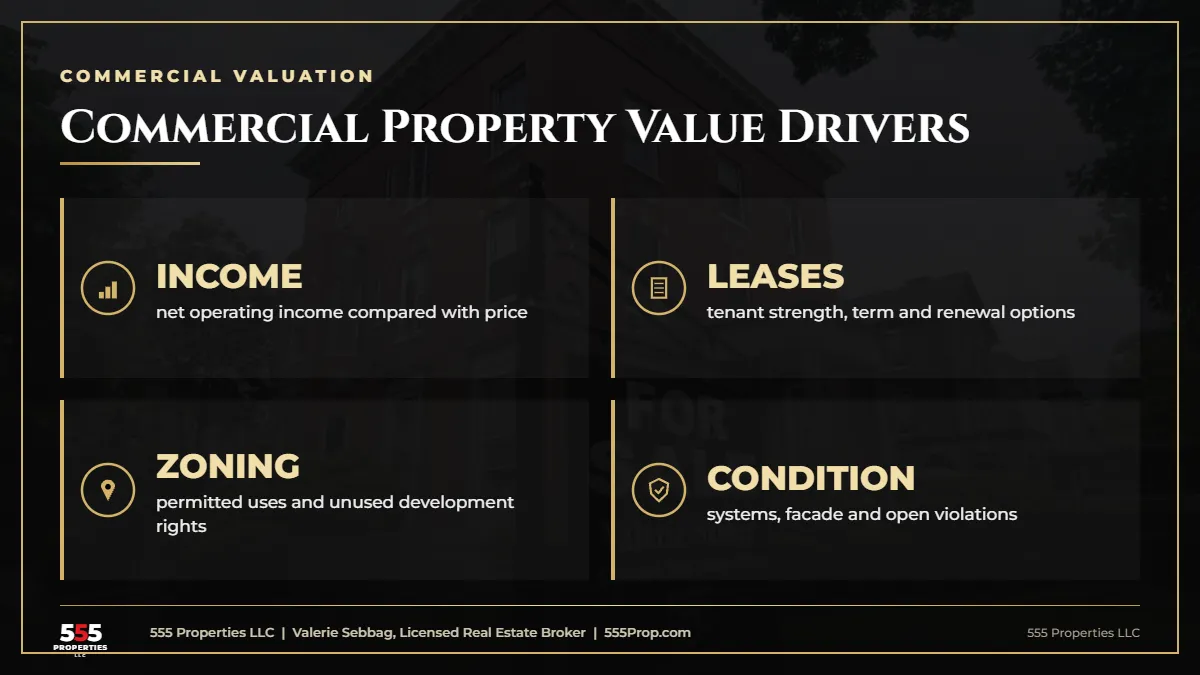
How Buyers Price Commercial Property
Most commercial buyers start with net operating income and compare it with the price to arrive at a cap rate. Then they adjust for what the numbers do not show: the strength and term of leases, the zoning and any unused development rights, the building’s condition and open violations. Our guide to selling an investment property walks through the process step by step.
Recent changes have widened opportunities in Central Brooklyn. City of Yes for Economic Opportunity, approved in 2024, allows a broader range of businesses in commercial districts. In Crown Heights, the Atlantic Avenue Mixed-Use Plan and the 73-99 Empire Boulevard rezoning, both approved in 2025, opened sites to mixed-use development. 555 Properties LLC represented the seller of the 537 East New York Avenue development site in Crown Heights.
The 1031 Exchange, Explained
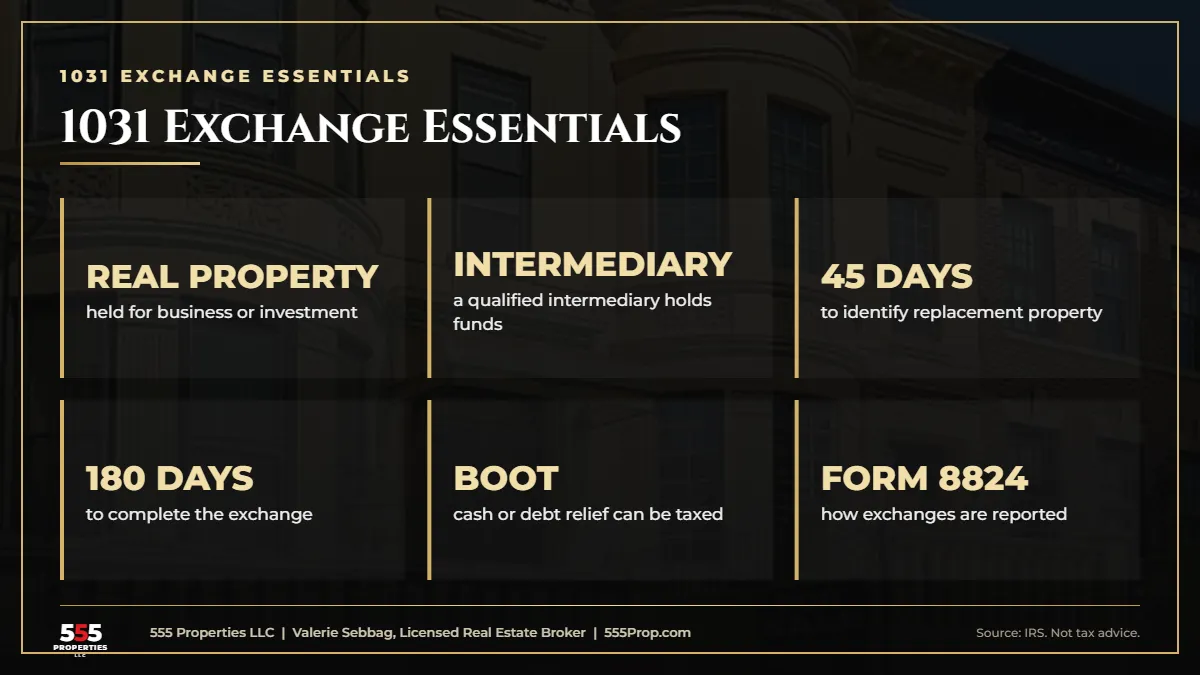
A Section 1031 like-kind exchange lets an owner sell real property held for business or investment and reinvest the proceeds in other like-kind real property while deferring capital gains tax. Since 2018, the rule applies to real property only. A primary residence does not qualify.
- Like-kind is broad for real estate. A mixed-use building can generally be exchanged for a multifamily building or other investment real estate, within the rules.
- Boot is taxable. Cash or other property you receive that is not like-kind, or a reduction in debt, can be taxed.
- Reporting. Exchanges are reported to the IRS on Form 8824.
- Plan early. The 45 and 180 day deadlines are strict, so line up advisors and potential replacement properties before you sign a sale contract.
Read more on our 1031 exchange page and the 1031 exchange broker page. This is general information, not tax advice.
Preparing a Commercial Sale
- Assemble leases, a rent roll and two or more years of expenses.
- Pull the certificate of occupancy and check for open HPD and Department of Buildings violations.
- Confirm zoning and any development rights on the city’s ZoLa map.
- Review your property tax class and assessment history.
- Decide on vacancies and lease renewals before launch.
- If exchanging, engage a qualified intermediary and your tax advisor early.

From Investment Property to Brownstone, and Back
Many Brooklyn owners hold both: a home and an income property. If your next move involves a brownstone, read our guide to selling a brownstone in Brooklyn. For the neighborhood picture, see the Crown Heights Market Report 2026, Why Investors Are Overlooking Crown Heights and the Crown Heights Development Watch. Estate sales of investment property are covered under probate and estate sales.
Valerie Sebbag represents sellers of commercial, mixed-use, multifamily and development property across Brooklyn. See commercial and investment sales, recent sales and testimonials, or request a private valuation.