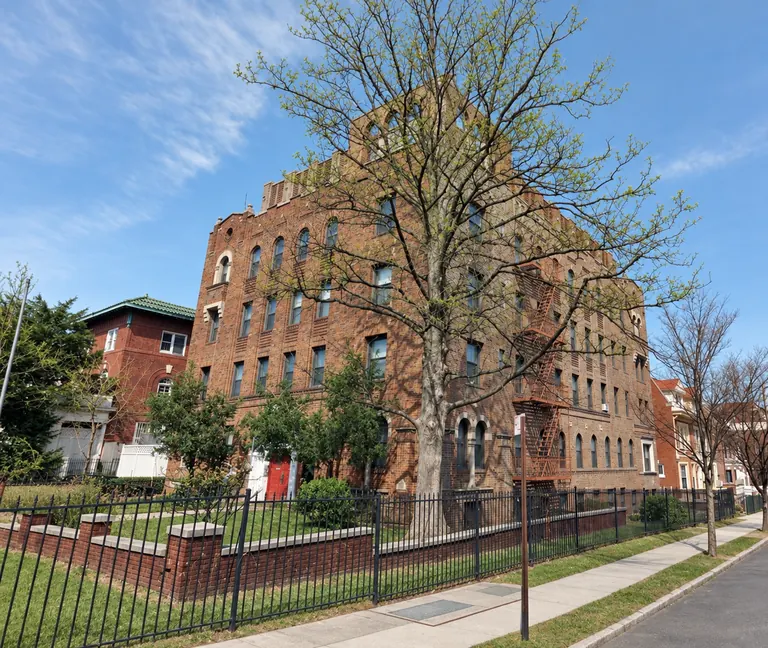
For Brooklyn multifamily owners, the outlook for 2026 depends less on headlines and more on what happens inside each building. Rents set the ceiling, but compliance, operating costs and paperwork determine how much of that income a buyer will pay for. Owners who understand those factors can plan improvements, avoid late surprises and choose the right moment to sell.
What Drives Multifamily Value Now

- Unit mix. The share of free-market and rent-stabilized units shapes future income. See our free-market vs. rent-stabilized guide.
- Operating costs. Property taxes, insurance, fuel and repairs. Buyers underwrite actual expenses, not estimates.
- Compliance. Open violations and missed filings become negotiating points or lender conditions.
- Condition. Roofs, boilers, facades and electrical service carry more weight as unit counts rise.
The Compliance Checklist Buyers Will Review
New York City has a set of building rules that apply depending on size, age and use. A buyer’s attorney and lender will usually check them. Knowing where your building stands before listing keeps the sale on track.
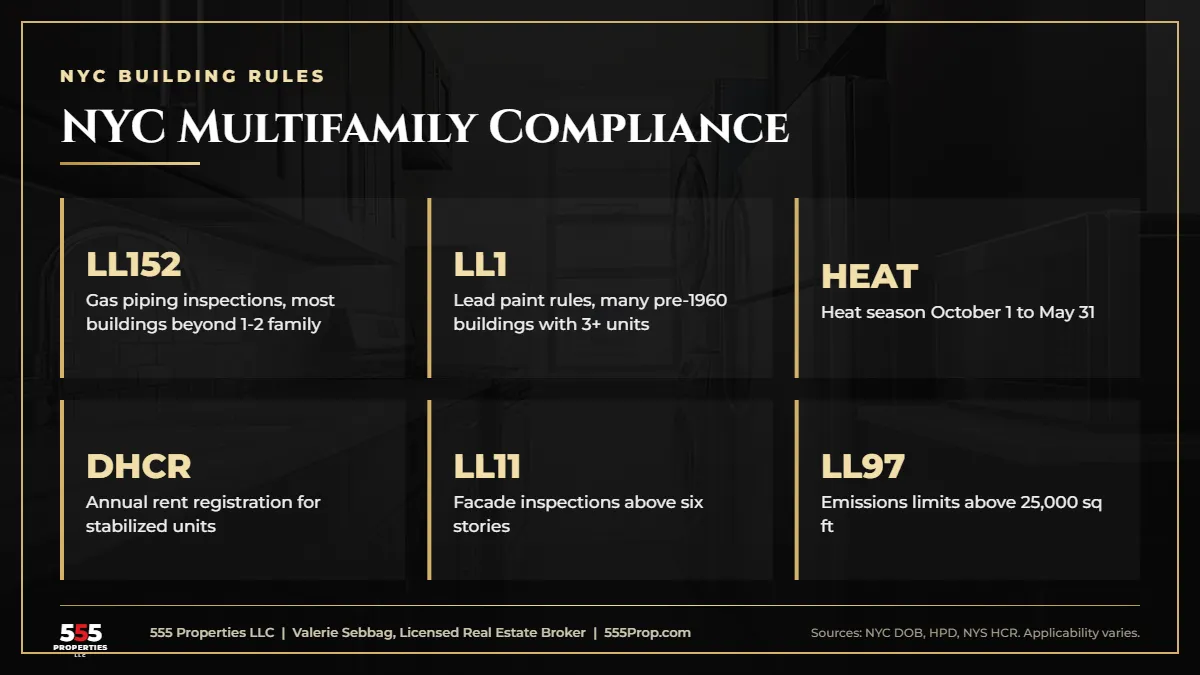
- Gas piping inspections (Local Law 152). Periodic inspections are required for most buildings with gas piping, other than one and two family homes.
- Lead-based paint (Local Law 1 of 2004). Applies to many buildings built before 1960 with three or more apartments, with added duties when a young child lives in a unit.
- Heat and hot water. Heat season runs from October 1 to May 31, with minimum indoor temperatures set by the city.
- Rent registration. Rent-stabilized units are registered annually with the state’s Division of Housing and Community Renewal.
- Facade inspections (Local Law 11). Required for buildings taller than six stories.
- Emissions limits (Local Law 97). Generally apply to buildings larger than 25,000 square feet.
Rules change and exemptions exist, so confirm your building’s status with an attorney or expediter. HPD and the Department of Buildings publish violation records you can review in advance.

Small Buildings, Different Rules
Two to four family homes sit in a different category. Most are outside rent stabilization, many rules for larger buildings do not apply, and owner-occupant buyers can often use residential financing. That is why they attract such a broad pool of buyers. Our article on why 2 to 4 family homes attract buyers covers that segment, including our recent two-family sales at 1375 Carroll Street and 1659 President Street.
Sell, Hold or Improve?
The right decision depends on your goals, your building’s condition and your tax position. Some owners invest in compliance and vacancies before selling; others sell as-is to a buyer who will do the work. A clear valuation of both paths makes the choice easier. If you plan to reinvest, read how investment sales work and our 1031 exchange page.
Valerie Sebbag represents owners of multifamily and mixed-use buildings across Brooklyn. See commercial and investment sales, the Crown Heights Market Report 2026 and Why Investors Are Overlooking Crown Heights, or request a private valuation.