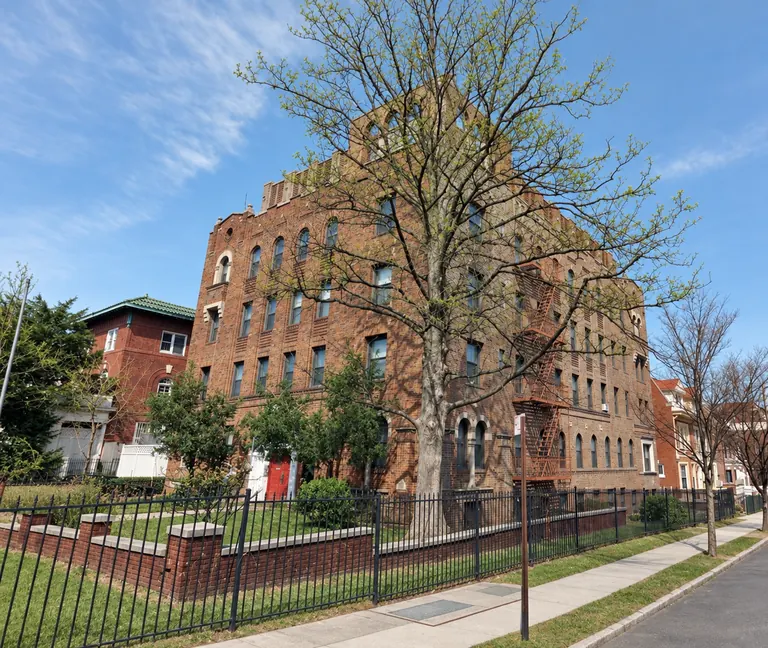
Across Brooklyn, two to four family homes hold a special place in the market. They are homes and investments at the same time: an owner can live in one unit and rent the others, or hold the whole building for income. In neighborhoods like Crown Heights, Flatbush and Bedford-Stuyvesant, these buildings make up a large share of the housing stock, and they attract one of the broadest pools of buyers of any property type.
Why Small Multifamily Homes Draw Buyers

Rental income offsets ownership costs
For an owner-occupant, rent from a second or third unit can cover a meaningful share of the mortgage, taxes and insurance. That matters when buyers watch monthly costs closely.
Owner-occupant financing
Many residential loan programs, including FHA loans, allow buyers to finance properties with up to four units when they live in one of them, and lenders may count part of the expected rental income. That widens the buyer pool well beyond professional investors.
Flexibility over time
Families use second units for relatives, for adult children or as rentals, and some buyers plan to convert or combine units later, where the law and the certificate of occupancy allow.
Simpler rent rules than larger buildings
New York’s rent stabilization generally applies to buildings with six or more units built before 1974, so most two to five unit buildings are not covered. That gives owners more flexibility, though tenant protection laws still apply, and each building’s history should be checked. Our free-market vs. rent-stabilized guide covers larger buildings.
Recent Two-Family Sales in Crown Heights
Two of our recent Crown Heights sales show how buyers value this property type.

1375 Carroll Street is a legal two-family of about 2,420 square feet, partially semi-detached, with private parking, a backyard and a finished basement. It sold for $2,200,000. 1659 President Street, a legal two-family brick home with more than 4,000 square feet, a driveway and a garage, sold for $1,670,000. In both cases, a legal two-family use matched by the certificate of occupancy, plus parking and outdoor space, were central to the buyer’s interest.

We are also marketing 713 East New York Avenue, a four-family property in Crown Heights. See all results on the Sold page and in the Crown Heights Market Report 2026.
How Buyers Value a 2 to 4 Family Home
- Legal use. The certificate of occupancy should match the number of units in use. An undocumented basement or attic unit can complicate financing.
- Rents and leases. Current rents, lease terms and whether units will be delivered vacant or occupied.
- Layout. Owner’s duplexes, separate entrances and separate utility meters add appeal.
- Condition and systems. Roof, boiler, electrical service and plumbing, which carry more weight with more units.
- Location. Transit access and block character, which drive both rents and resale.
Preparing to Sell
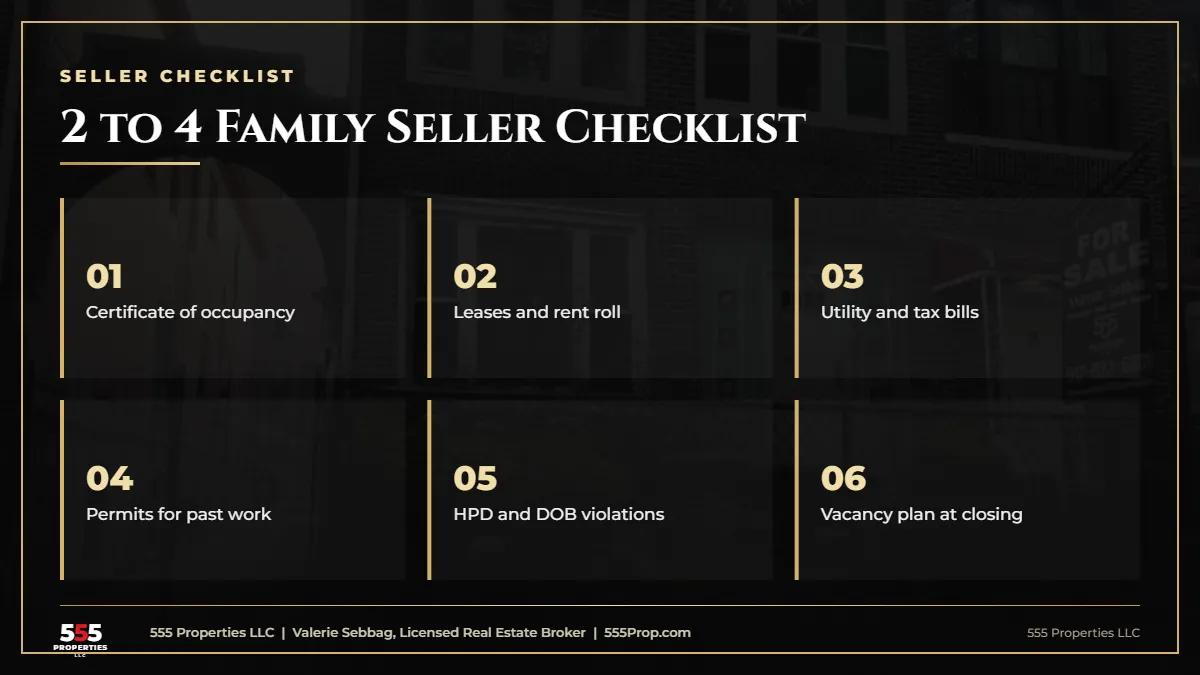
Gather the certificate of occupancy, current leases and a rent roll, a year of utility and tax bills, permits for past work and a check of any open violations with HPD or the Department of Buildings. Decide early whether units will be vacant at closing, since that shapes who your buyer will be. If you plan to buy another investment property, speak with your tax advisor about a 1031 exchange.
For more, read Crown Heights Real Estate 2026, Why Investors Are Overlooking Crown Heights and how to compare multiple offers. If the property is part of an estate, see selling an inherited property.
Valerie Sebbag represents owners of two to four family homes and multifamily buildings across Brooklyn. Learn more about investment sales or working with a Crown Heights realtor, and request a private valuation.