
Inheriting a Brooklyn home is often both a gift and a responsibility. Many family homes in Crown Heights, Flatbush, Bedford-Stuyvesant and across the borough have been held for decades, and when they pass to the next generation, the heirs face legal steps, tax questions and decisions about the house itself. Understanding the process makes it far easier to protect the property’s value and keep the family aligned.
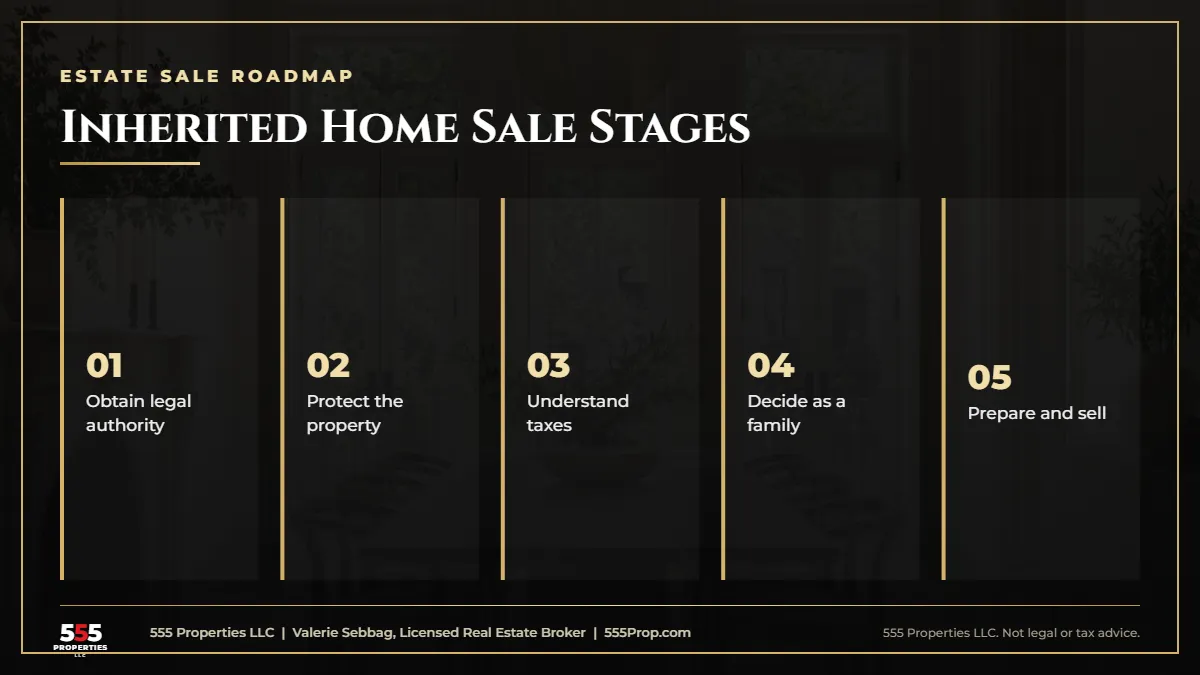
Step One: Who Has Authority to Sell?
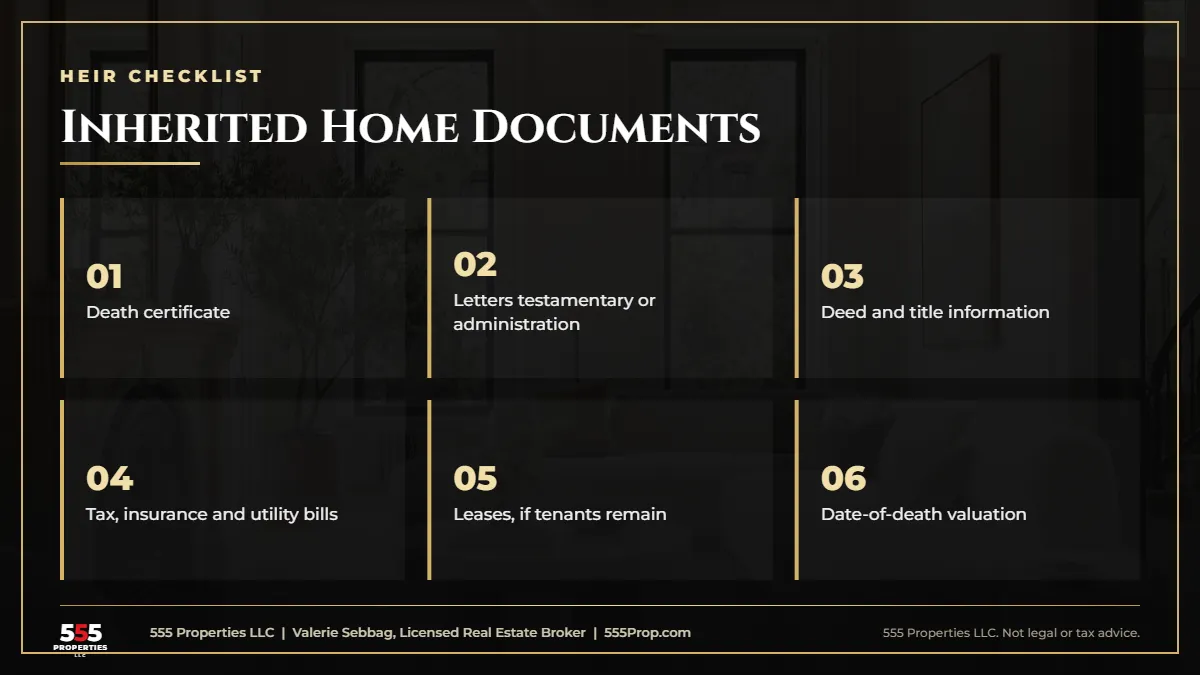
A house that belonged to someone who has passed away usually cannot be sold until a person has legal authority over the estate. In New York this generally comes from the Surrogate’s Court in the county where the person lived, which is Kings County for Brooklyn. If there is a will, the named executor applies for letters testamentary. If there is no will, a family member usually applies for letters of administration. Some homes held jointly, or in a trust, may pass outside of probate. An estate attorney can tell you which path applies. The New York State Unified Court System has general information on estates.
Step Two: Protect the Property
While the legal process moves forward, the house still needs care. Keep property taxes, insurance and utilities current, and check whether the insurance policy covers a vacant home, since many standard policies limit coverage after a property has been empty for a period. Secure the doors, keep the heat on in winter to protect pipes, and remove valuables and important papers.

Step Three: Understand the Tax Picture
Taxes are often the biggest question for heirs, and the answers depend on the estate and on each heir’s situation.
- Stepped-up basis. For federal income tax, inherited property generally takes a tax basis equal to its fair market value at the date of death. If the home is sold soon after for about that value, there may be little or no capital gain. See IRS Publication 551, Basis of Assets.
- New York estate tax. New York has its own estate tax for estates above an exclusion amount, with a “cliff” that can tax the whole estate once it exceeds the threshold by more than a small margin. Your accountant or attorney can confirm whether it applies.
- Transfer taxes at sale. NYC and New York State transfer taxes apply when the estate sells the property. Our seller timeline lists current rates.
Step Four: Decide as a Family
Heirs may want different things: one wants to keep the house, another needs cash, a third lives out of state. Common paths include selling and dividing the proceeds, one heir buying out the others, or renting the property for a time. A clear valuation helps every heir see the same numbers, which reduces conflict.

Step Five: Prepare and Sell
Many inherited homes need clearing out, and some need repairs. Decide with the family how much to invest before listing. Sometimes a careful clean-out and cosmetic refresh is enough; sometimes selling as-is to a buyer who wants a renovation project is the better choice. For older two and three family homes, confirm the certificate of occupancy and the status of any tenants. Read selling a Brooklyn home with tenants and how to maximize value before selling.
555 Properties LLC works with executors, administrators, families and institutions. Our Crown Heights sales include 1337 President Street, sold for $5,000,000 on behalf of a seller connected with the Church of St. Mark. Learn more on our inherited property, NYC estate sales and probate and estate sales pages, read selling a brownstone in Brooklyn, or request a private valuation.