
Tribeca, the Triangle Below Canal Street, is known for its converted warehouse lofts, cobblestone side streets and quiet residential blocks just north of the Financial District. Buyers here pay close attention to light, ceiling height, layout and building quality, so a thoughtful sale plan matters. This guide covers what Tribeca owners should know before selling in 2026.
Tribeca at a Glance
Tribeca sits roughly between Canal Street, Broadway, Chambers Street and the Hudson River. Much of the neighborhood is protected by four historic districts, Tribeca West, East, North and South, designated in the early 1990s, which preserve its cast-iron and masonry warehouse buildings. Washington Market Park, the Hudson River Park piers and the restaurants along Greenwich and Hudson Streets are everyday draws for residents.
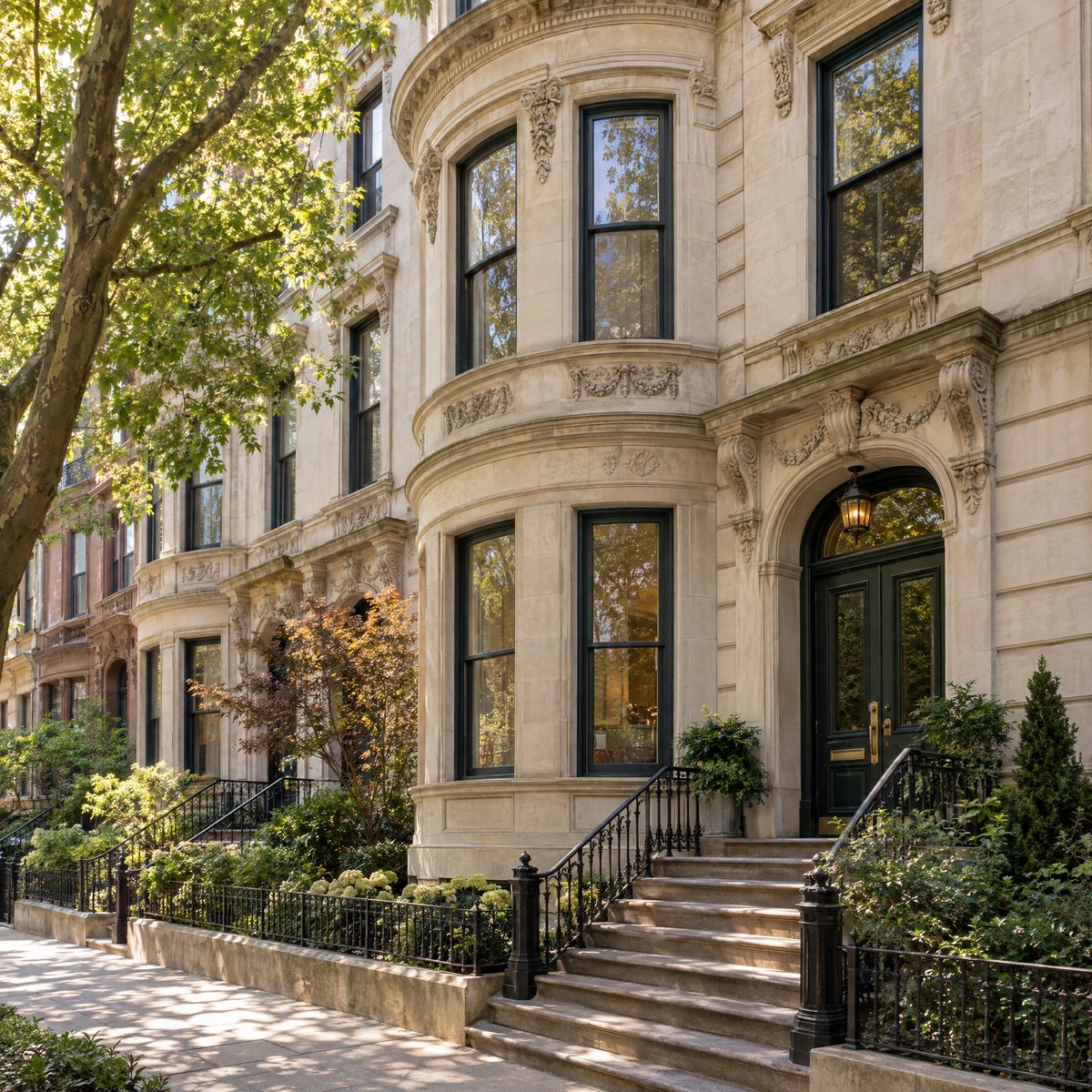
Tribeca’s Housing Stock
- Loft condos and co-ops. Most Tribeca homes are in converted commercial buildings, with high ceilings, large windows and open plans.
- New condo buildings. Newer towers and boutique buildings add amenities such as doormen, gyms and parking.
- Rare townhouses. A handful of Federal-style houses, like those on Harrison Street, are among the oldest homes in Lower Manhattan.
Getting around: the 1 train at Franklin Street and Chambers Street, the A, C and E at Canal Street and Chambers Street, and the 2 and 3 at Chambers Street.
What Tribeca Homes Sold For: Public Records
Here is what NYC Department of Finance records show for Tribeca over the past 12 months compared with the year before.
| Property type | Median, Oct 2025 to Sep 2026 | Sales | Prior 12 months | Change |
|---|---|---|---|---|
| Condos | $2,830,000 | 278 | $3,087,500 | -8.3% |
| Co-ops | $2,092,301 | 73 | $2,210,250 | -5.3% |
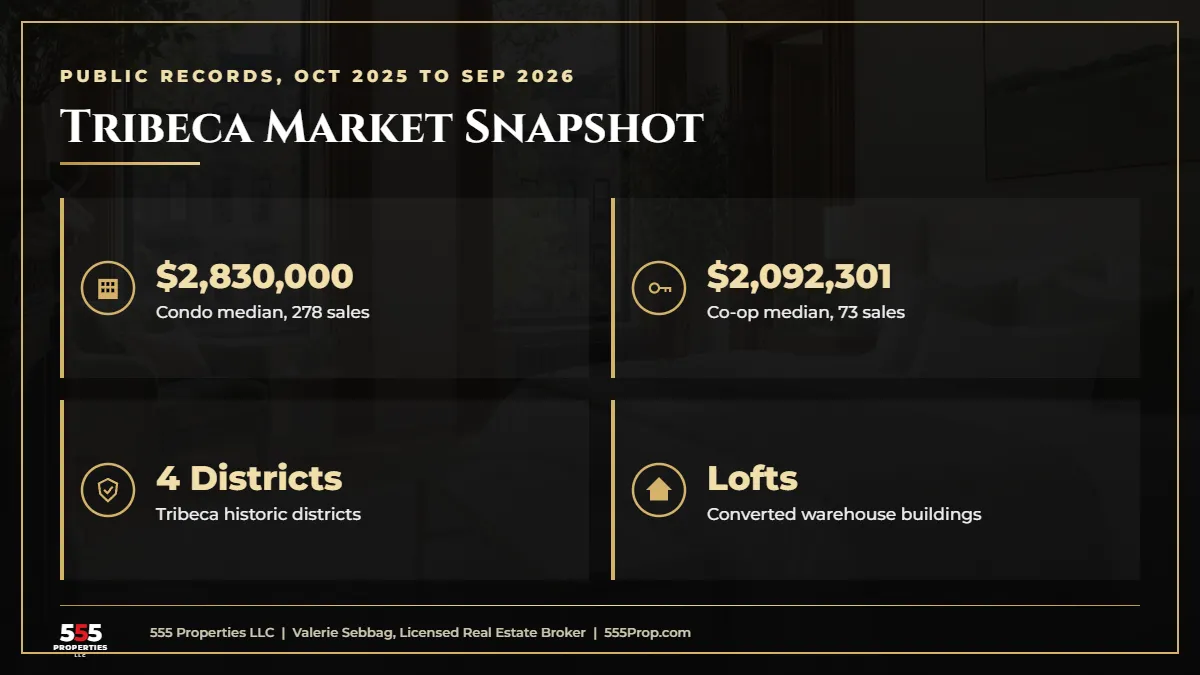
Tribeca condo and co-op medians eased slightly over the year while sales volume held steady for condos. Because Tribeca homes vary widely in size and finish, comparable sales in your own building and on your block matter more than the neighborhood median.
About the data. 555 Properties LLC analysis of NYC Department of Finance recorded sales for the Finance neighborhood “Tribeca”. Sales under $100,000 are excluded. Medians describe the market, not the value of any one home, and small groups of sales can swing sharply.
Selling a Tribeca Loft
- Check the certificate of occupancy. Some older lofts in former manufacturing buildings carry special uses, such as joint living-work quarters for artists. Buyers, lenders and attorneys will review the legal use, so gather this early.
- Co-op boards. Loft co-ops often have detailed board packages, financial requirements and sometimes a flip tax.
- Historic district rules. Exterior changes need Landmarks Preservation Commission approval, so keep records of past work.
- Building health. Buyers ask about reserves, assessments, and for larger buildings, Local Law 97 compliance plans.
- Closing costs. Sellers usually pay the NYC Real Property Transfer Tax and the New York State transfer tax, which rises for residential sales of $3 million or more in NYC.
See also selling a luxury property, our Chelsea and Greenwich Village pages.
Recent 555 Properties Sales


See every closed deal on our sold properties page.
Hear From Sellers


Read more on the testimonials page.
Frequently Asked Questions
What should I prepare before selling a Tribeca loft?
Gather the certificate of occupancy, building financials, any alteration agreements and records of past renovations. These answer the questions buyers and their attorneys ask first.
Are Tribeca prices going up or down?
Public records show condo and co-op medians eased slightly over the 12 months ending September 2026. Prices for individual lofts depend heavily on size, light and building.
Can I sell a loft with artist use on the certificate of occupancy?
Often yes, but the rules are specific. Speak with a real estate attorney early so the sale plan matches the legal use.